
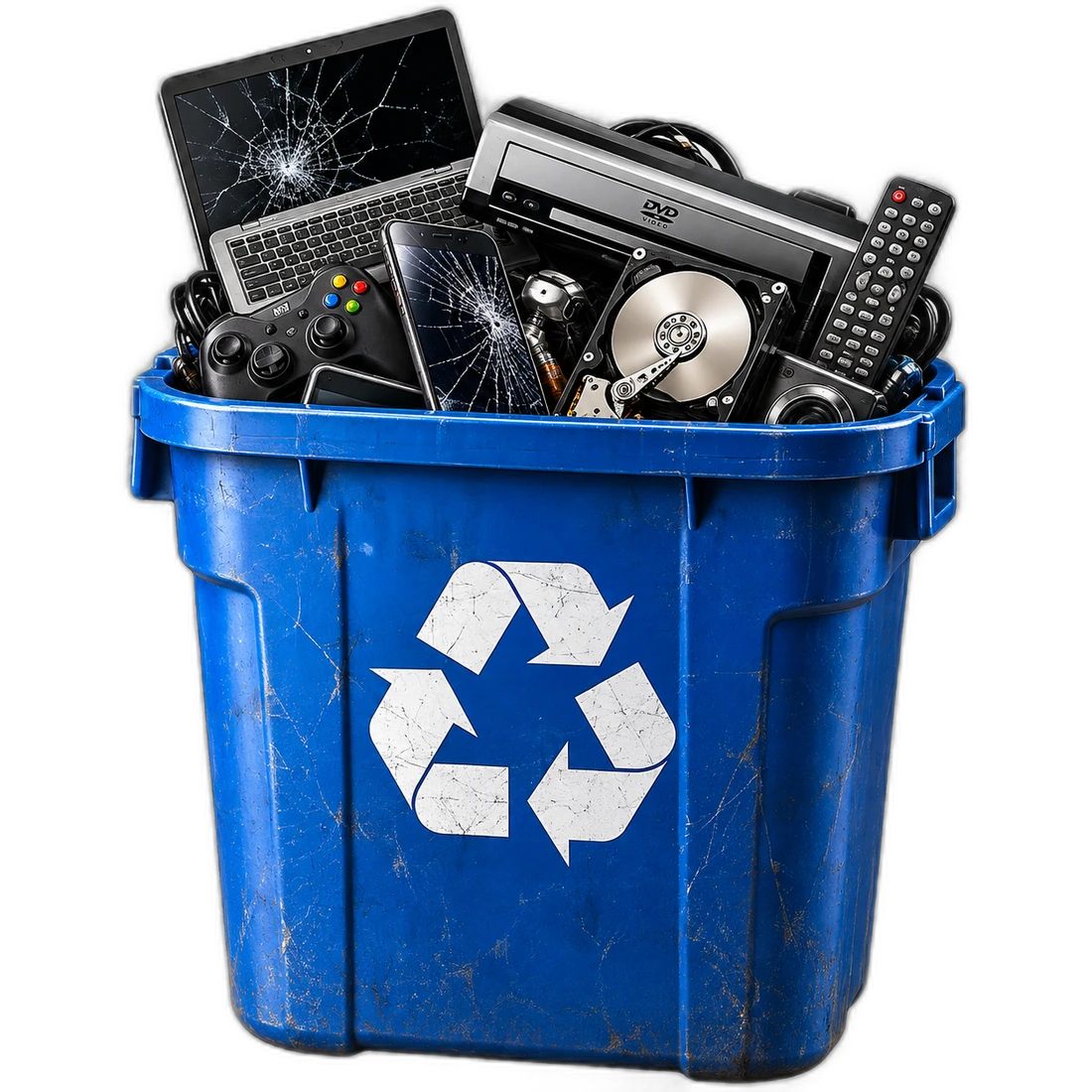
Electronics recycling
End-of-life gear disposed of responsibly — and anything still useful gets a second life in the parts bin.
What’s included
- TVs, computers, phones, and AV equipment accepted
- Drives wiped or physically destroyed on request, for data security
- Working parts pulled and kept for use in future repairs
- Responsible disposal of what can’t be reused
- Call ahead for larger quantities or a full cleanout
Common problems
Consumer electronics are full of materials that don’t belong in a landfill — and full of parts that are still perfectly good. Before anything gets recycled, it gets checked for parts worth keeping: keyboards, mice, cords, drives, and small components that end up in the next repair instead of the trash.
If a device holds personal data — a computer, phone, or hard drive — the drive gets wiped or physically destroyed on request before anything moves on, so data security isn’t left to chance.
This is a natural fit alongside any other repair: if a device isn’t worth fixing, it doesn’t have to just sit in a closet or go in the trash. Drop it off and it’ll be handled properly.
What it costs
Recycling is generally free for typical household quantities. For a larger cleanout — an office, an estate, several devices at once — call or email ahead to arrange it.